
.png)

The Countries That Pioneered Home Appliances

Every modern kitchen holds a collection of appliances that make daily life easier and more efficient. From washing dishes to cooking meals and preserving food, these inventions have transformed how we live. But have you ever wondered which countries first created these essential kitchen appliances? This post explores the origins of six key appliances: the dishwasher, oven, stove, washer, dryer, and fridge. Understanding their roots reveals fascinating stories of innovation and cultural influence.
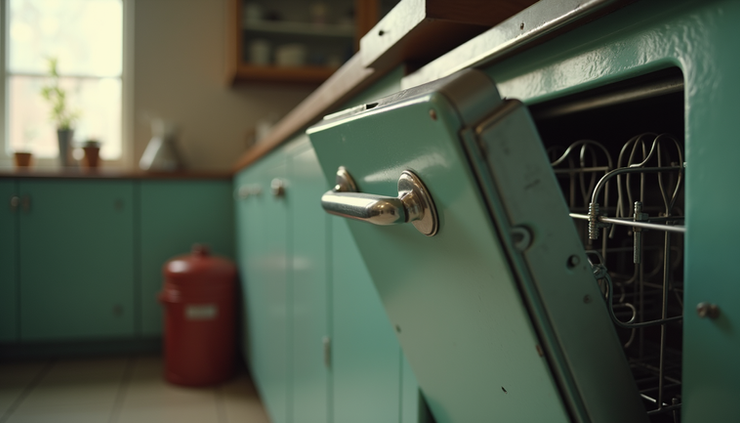
The Dishwasher: United States Leads the Way
The dishwasher is a staple in many homes today, but it was invented in the United States. In 1886, Josephine Cochrane, an American socialite, created the first practical dishwasher. Frustrated by her fine china chipping during hand washing, she designed a machine that used water pressure to clean dishes efficiently. Her invention was patented in 1886 and debuted at the 1893 World's Columbian Exposition in Chicago.
Cochrane’s dishwasher was initially aimed at hotels and restaurants, but it eventually found its way into homes. The United States remains a leader in dishwasher technology, with many modern innovations coming from American companies.
The Oven: Ancient Roots in Egypt and Rome
Ovens have a long history, with early versions dating back thousands of years. The first known ovens were developed in ancient Egypt around 2500 BC. These early ovens were simple clay structures used for baking bread. Later, the Romans improved oven designs by building brick and stone ovens that could maintain consistent heat.
The modern oven, especially the gas oven, was developed much later in Europe. In the early 19th century, European inventors began experimenting with gas as a fuel source, leading to safer and more controllable ovens. Today, ovens come in many forms, including electric and convection models, but their roots trace back to these ancient civilizations.
The Stove: Germany’s Contribution
The stove, distinct from the oven, refers to the appliance used for cooking food on a flat surface with controlled heat. The first modern stove was invented in Germany by Benjamin Thompson, also known as Count Rumford, in the late 18th century. He designed a stove that was more efficient than open fires, using enclosed chambers to retain heat.
Later, in the 19th century, German and Austrian inventors improved stove designs, introducing cast iron stoves with multiple burners. These innovations spread across Europe and North America, replacing open hearths and making cooking safer and cleaner.
The Washer: American Innovation
The washing machine, essential for cleaning clothes and household textiles, was also pioneered in the United States. The first patent for a washing machine was granted to James King in 1851 for a machine with a drum that rotated. However, it was Alva J. Fisher who is often credited with inventing the first electric washing machine in 1908.
American companies like Whirlpool and Maytag played significant roles in popularizing washing machines in the 20th century. These machines evolved from manual cranks to fully automatic models, transforming household chores.
The Dryer: United States Again
The clothes dryer, which complements the washing machine, was invented in the United States as well. In 1938, J. Ross Moore patented the first electric clothes dryer. Early dryers were simple tumblers heated by gas or electricity, designed to speed up drying times compared to air drying.
Over time, dryers have become more energy-efficient and feature-rich, including moisture sensors and steam cycles. The U.S. remains a major market and innovator in dryer technology.

The Fridge: Sweden’s Breakthrough
Refrigeration technology has a complex history, but the modern electric refrigerator was invented in Sweden. In 1913, Baltzar von Platen and Carl Munters developed an absorption refrigerator that used no moving parts and was more reliable than earlier models.
The first practical household refrigerators appeared in the 1920s and 1930s, with American companies like General Electric and Frigidaire popularizing them. However, the Swedish invention laid the groundwork for safer, more efficient refrigeration.
Refrigerators revolutionized food storage by slowing bacterial growth and reducing waste. Today, they are standard in homes worldwide, with features like frost-free technology and smart controls.
How These Inventions Changed Daily Life
Each of these appliances originated in different countries but shares a common goal: to make household tasks easier and more efficient. Their development reflects advances in technology, materials, and energy sources over time.
The dishwasher saved time and reduced labor in cleaning dishes.
The oven and stove improved cooking safety and precision.
The washer and dryer transformed laundry from a manual chore to a largely automated process.
The fridge extended food freshness and safety, changing eating habits.
These inventions also influenced social changes, such as freeing up time for other activities and improving health through better hygiene and food preservation.
Conclusion
Knowing where these essential kitchen appliances come from adds appreciation for the innovations that shape our daily routines. The United States played a major role in inventing the dishwasher, washer, and dryer. Germany and Sweden contributed key designs for the stove and fridge, while ancient Egypt and Rome laid the foundation for the oven.
Next time you use any of these appliances, consider the history behind them and the inventors who made life easier for millions. Exploring these origins can inspire curiosity about how technology continues to evolve in our homes.
Now you know!


Comments